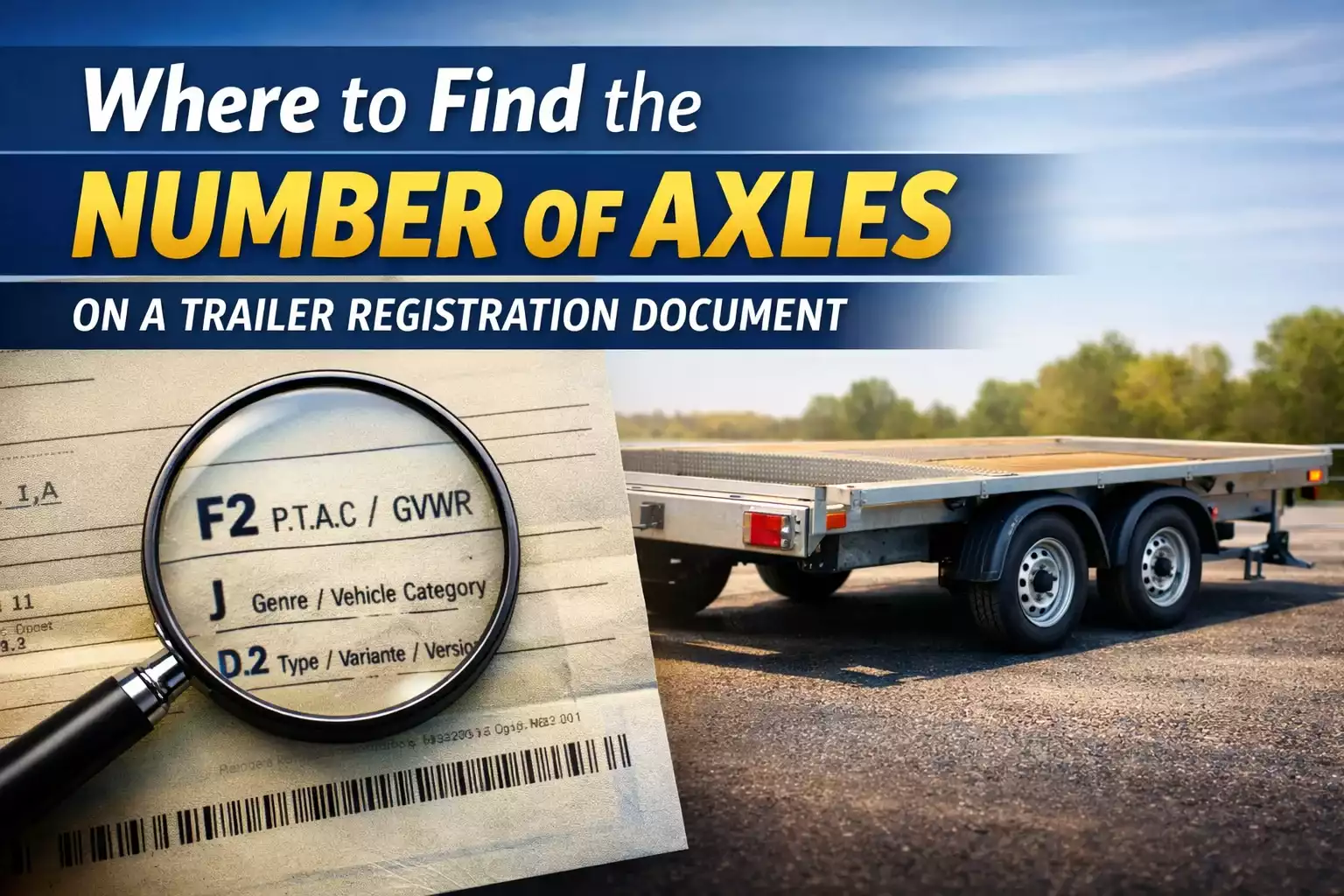
When owning or buying a trailer in the UK, it is sometimes necessary to identify how many axles the trailer has. This information can be useful for administrative purposes, compliance with towing regulations, or simply to understand the vehicle’s technical configuration.
However, many people expect the axle count to be clearly written on the V5C vehicle registration certificate (logbook). In reality, the number of axles is not always explicitly stated, which can make identification slightly confusing.
Is the Number of Axles Listed on the V5C?
On a UK V5C registration document, there is generally no dedicated field that directly states the number of axles for a trailer or vehicle. The document mainly contains identification details such as the manufacturer, vehicle category, weight limits and VIN number.
Because of this, determining the axle configuration often requires combining information from the V5C with a visual inspection of the trailer itself.
Key Fields on the V5C That May Help
Although the axle count is not directly mentioned, several fields on the registration document can provide useful indications about the trailer’s configuration.
-
Maximum Authorised Mass (MAM) – heavier trailers often use two axles to distribute the load.
-
Vehicle category and body type – these fields may indicate whether the trailer is designed for light or heavy-duty use.
-
VIN / manufacturer information – checking the VIN with the manufacturer can reveal the original technical specifications.
These elements help determine whether the trailer is likely to be a single-axle or twin-axle trailer.
The Easiest Method: Check the Trailer Itself
In most situations, the simplest and most reliable method is to physically inspect the trailer.
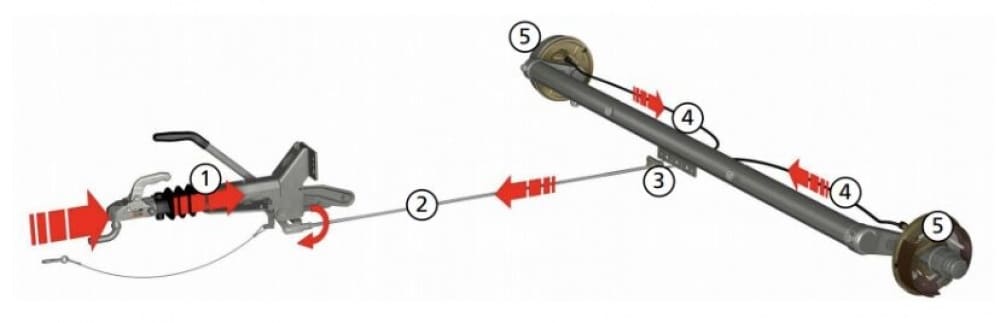
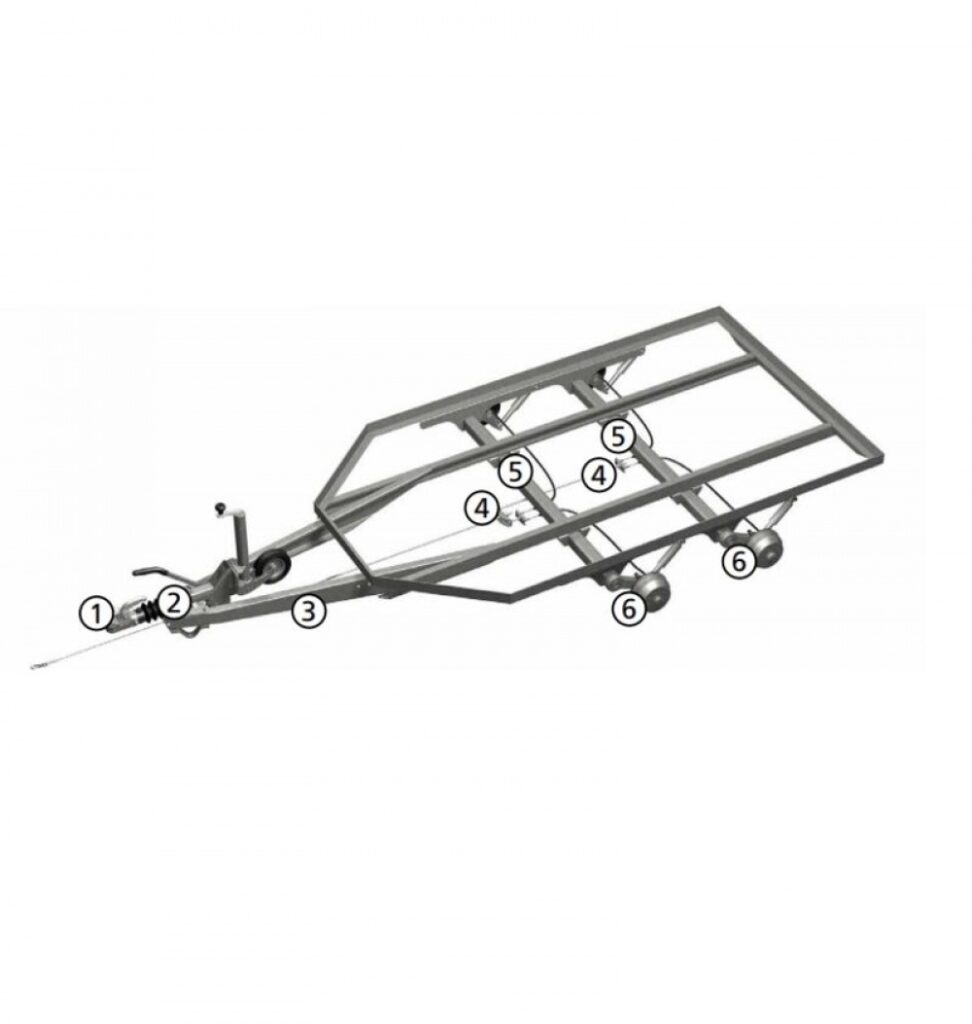
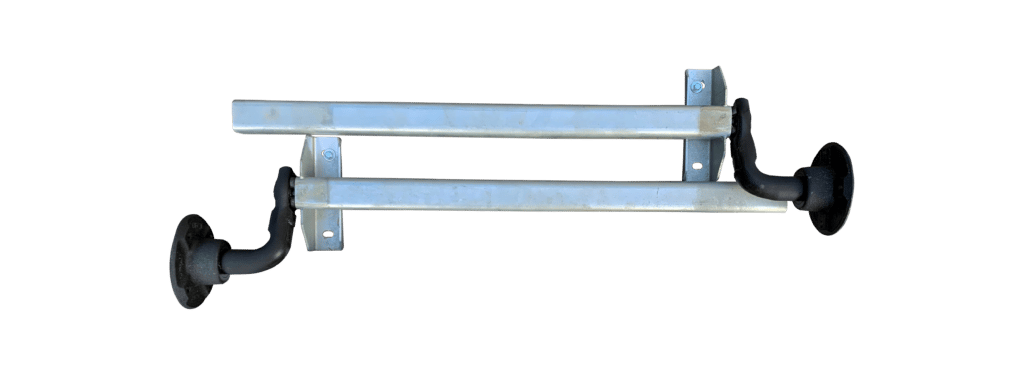
The number of axles corresponds to the number of horizontal shafts connecting the wheels on each side. In the UK market, trailers are typically classified as:
-
Single-axle trailers – lighter, easier to manoeuvre and common for domestic or leisure use.
-
Twin-axle trailers – offer greater load capacity and improved stability when towing.
-
Multi-axle trailers – generally used for professional or heavy transport applications.
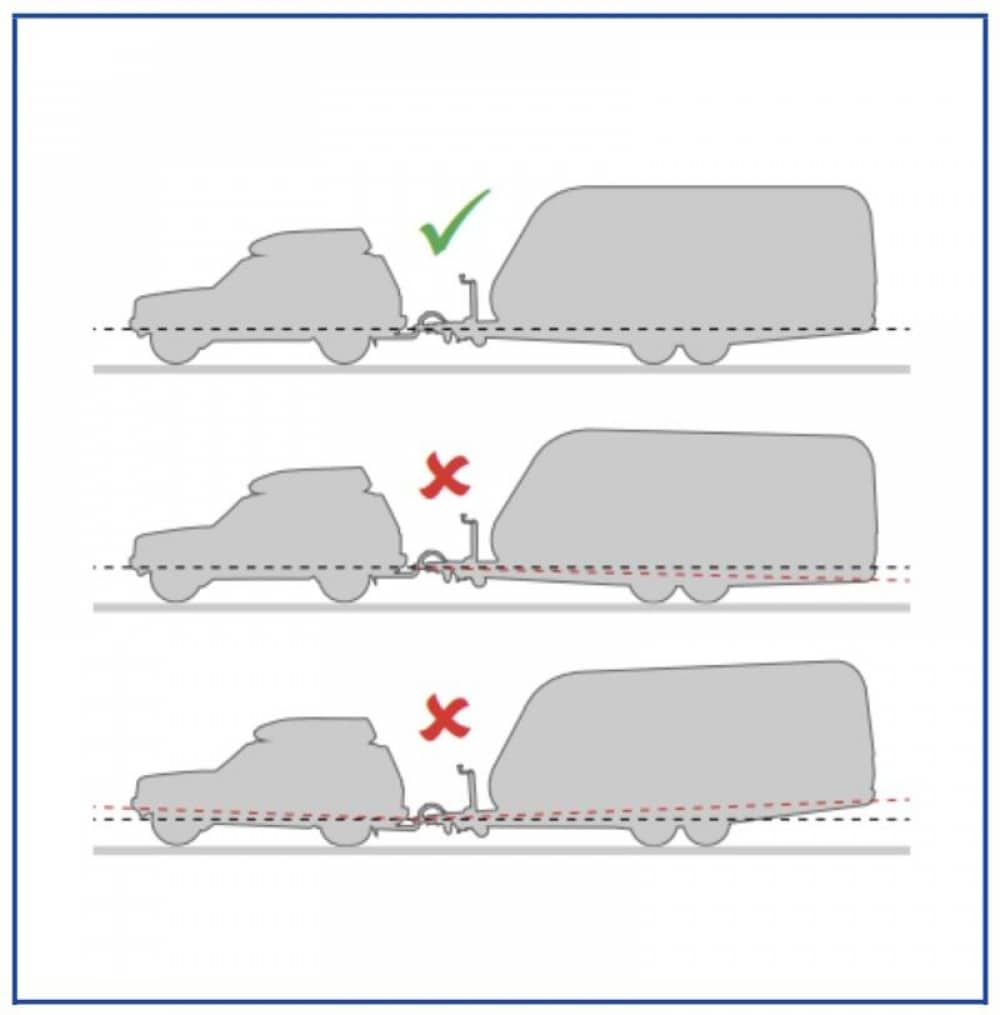
The axle configuration has a direct impact on the stability, load distribution and braking performance of the trailer.
Why Axle Configuration Matters
The number of axles is a key element in trailer design. It determines how the weight is distributed and how the trailer behaves when braking or cornering.
Single-axle trailers are usually more manoeuvrable and cheaper to maintain, while twin-axle trailers provide better stability and can handle heavier loads. The appropriate configuration depends largely on the intended use and towing capacity of the vehicle.
For specialised vehicles or equipment trailers, the axle configuration may need to be tailored to the chassis and load requirements.
When Custom Axles May Be Required
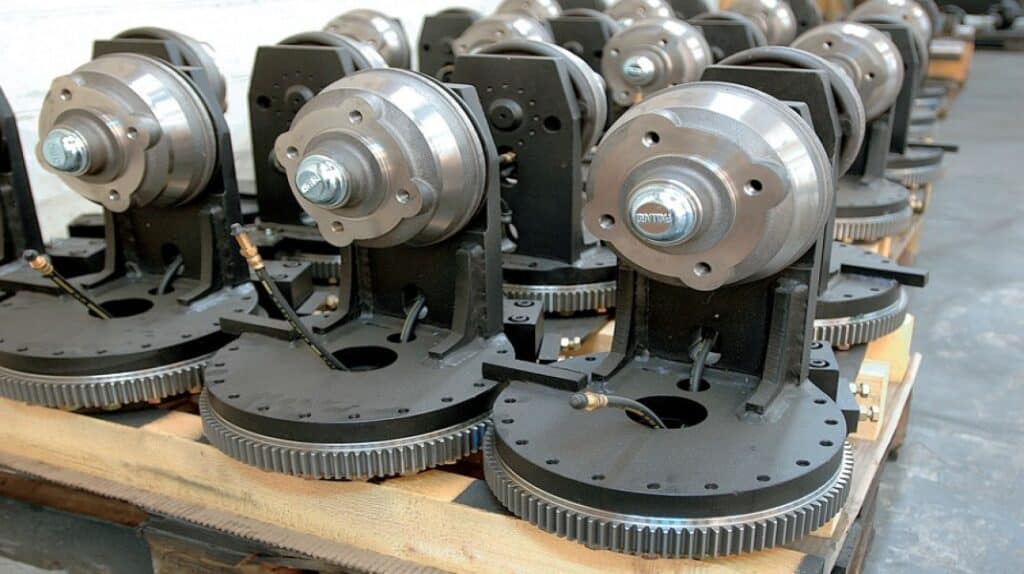
For certain technical trailers, industrial equipment or specialised vehicles, a standard axle configuration may not be sufficient. In these cases, manufacturers may develop custom axle solutions designed specifically for the chassis dimensions and load requirements.
For example, custom trailer axles can be engineered to match precise vehicle specifications, ensuring optimal load distribution and improved durability.
Trailer Types and Typical Axle Configurations
| Trailer type | Typical axle configuration | Common use |
|---|---|---|
| Small domestic trailer | Single axle | DIY, garden waste, leisure |
| Utility trailer | Twin axle | Equipment transport, construction |
| Industrial trailer | Multiple axles | Heavy machinery or specialist transport |
In Summary
In the UK, the number of axles is not always clearly stated on the V5C registration document. Identifying the axle configuration usually involves checking the vehicle specifications and visually inspecting the trailer.
Understanding the number of axles is important for safe towing, load distribution and ensuring that the trailer is suitable for its intended use.